

The view has a price
Canyon lots are why a lot of people move here. They also come with a set of constraints that flat-lot construction never encounters, and those constraints decide the project far more than the architecture does.
None of them are dealbreakers on their own. Together they mean feasibility work matters more here than almost anywhere.
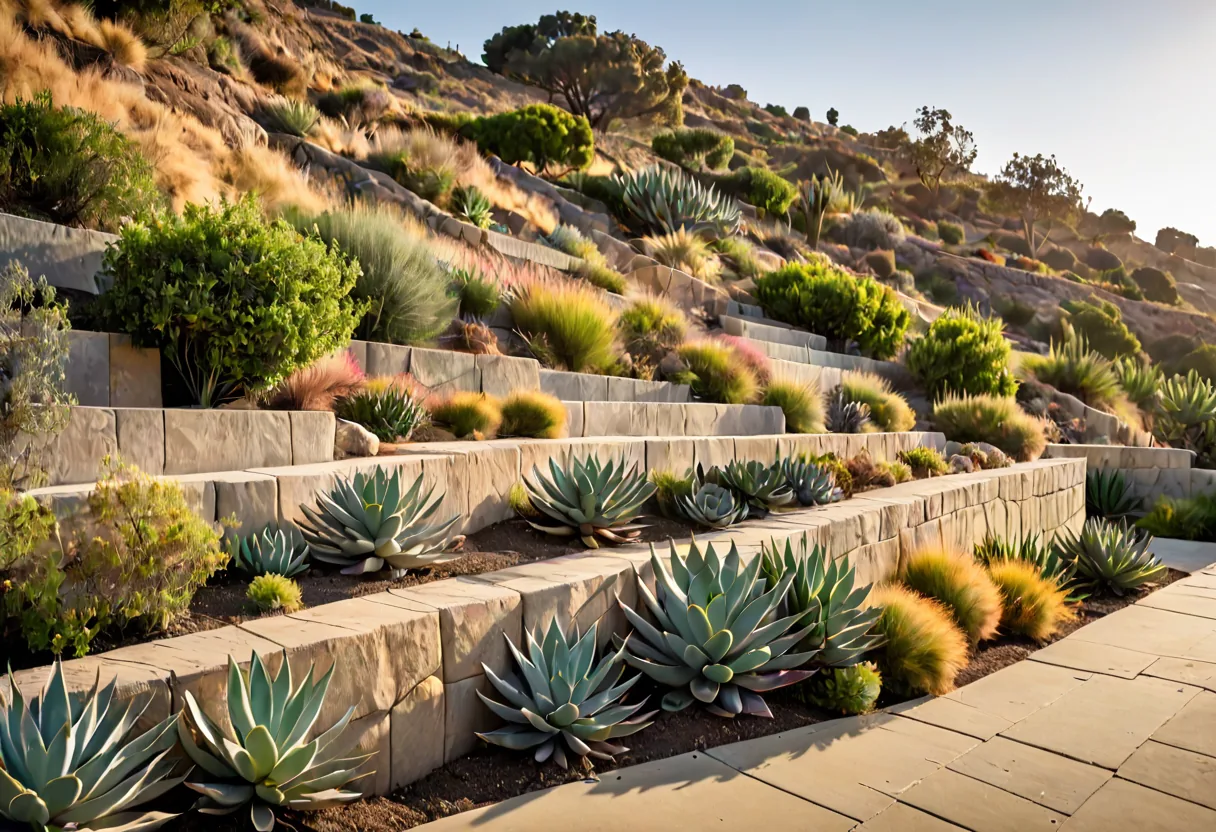
Slope and soils
The soils report stops being a formality on a canyon parcel and becomes the document the whole design follows. Slope stability, setbacks from the top of slope, and how the foundation transfers load into competent ground all come from it.
Deep foundations - caissons or piers - are not unusual on steeper parcels, and they change the budget materially. Better to know that before design than during.
Brush management
Canyon vegetation is fuel, and properties adjacent to it carry obligations to manage it within a set distance of structures. That distance is effectively a buffer between your building and the canyon edge, and it can constrain where a structure or an ADU can physically sit.
It also shapes landscaping permanently. Planting within the managed zone has to be chosen and maintained with fire behaviour in mind, which is a design brief rather than an afterthought.
Access and drainage
Two practical items that get underestimated. Construction access on a steep parcel affects what equipment can reach the site, which affects cost and sometimes method.
And drainage has to be engineered rather than assumed. Water concentrated by a hard surface and released onto a slope causes erosion, and discharging into the canyon is not a solution you can adopt informally.
On a canyon lot, the soils report and the brush management setback decide the project. Establish both before you fall for a design.